How to keep a study routine when you share your workspace
· Editorial team minneapolisnewsdaily24.com
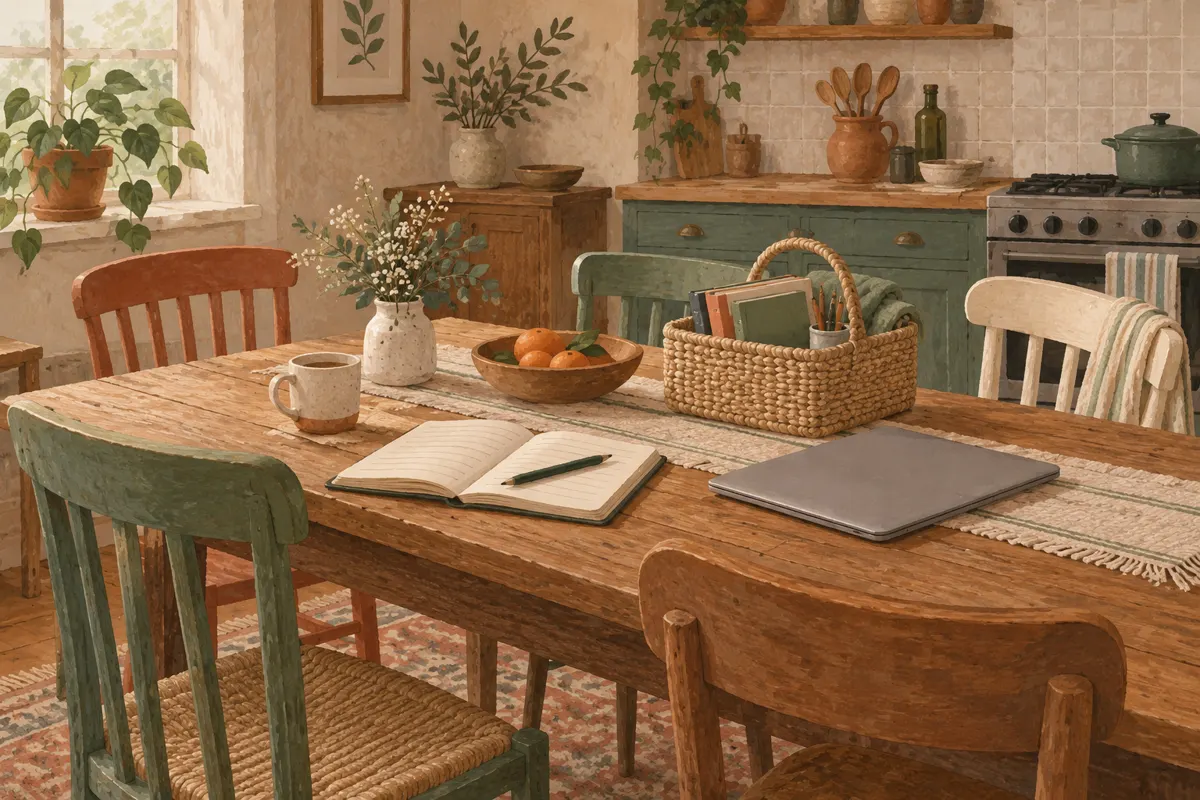
To keep a study routine in a shared workspace, make your setup easy to unpack, agree on specific quiet periods, and give each session one manageable task. Keep a note of your next step so you can resume after interruptions. A shared kitchen table can serve as a study space without being permanently reserved for studying.
Pack a study kit you can put away
When your table also hosts meals, household paperwork, or someone else’s work, setting up and clearing away are part of the routine. Keep the materials you regularly need together. The supplied study guides recommend having materials within reach and clearing unnecessary objects before starting.
Our practical proposal is a portable study kit in a bag, basket, or box you already own. Give it a storage spot away from the table so you can restore the shared space when you finish.
- Your current book or course materials.
- A notebook, pens, and any required charger.
- Headphones, if you already use them for studying.
- A small task sheet showing your next assignment and where you stopped.
Unpack only what today’s task requires. Leave enough space for your book and notes, check that you can read comfortably in the available light, and choose a chair that feels comfortable for the session.
Agree on quiet periods with clear boundaries
Ask for a specific period of reduced interruption rather than a general promise to be quiet. Planning around household responsibilities and negotiating quiet hours are both suggestions in the NCC home-study guide. Look for a time when the table is available and others can reasonably accommodate you.
A proposed agreement might be: “I’ll use the table from 7:30 to 8 tonight to finish these questions. Could conversations and videos wait until afterward? I’ll clear everything away at 8.” Adjust the timing to your household, and agree on which interruptions need immediate attention.
Make the arrangement reciprocal. Check whether someone else needs the table, and honor the finishing time. If quiet is limited, reserve that window for demanding reading or problem-solving. Leave organizing notes or checking assignment requirements for a less quiet period.
Give short sessions a specific finish line
Plan sessions around the time you actually have. For an adult learner balancing work and household responsibilities, an open-ended plan to “study tonight” leaves several decisions unresolved: when to start, what to do, and when to stop.
- Choose one task before unpacking, such as answering three practice questions or outlining one assignment section.
- Set a realistic stopping time. A 20-minute session is one possible starting point, not a required formula.
- Open the relevant materials and close unrelated tabs. Silence unnecessary notifications or put your phone aside if the task does not need it.
- Work on the chosen task until the stopping time, then record what remains.
Define progress through an action you can check. “Write a rough introduction” gives you a clearer endpoint than “work on the essay.” If the task is too large for the available window, divide it before you begin.
Leave yourself a restart checklist
Some interruptions will still happen. Our proposed restart checklist gives you a written place to return to, especially when you must pack away mid-task. Keep it in your notebook or in a single digital note you can find easily.
- Save your work and mark the page, question, or document section.
- Write the next physical action: “Check the example on page 42,” rather than “Continue studying.”
- Note any unresolved question so you do not have to reconstruct it later.
- When you return, read the note, reopen the relevant material, and complete that first action.
If little time remains, choose one smaller action and finish there. Avoid extending the session into someone else’s agreed table time simply because an interruption changed your plan.
Adjust the routine to the household
Our proposal is to review the arrangement briefly at the end of each week. Notice which sessions happened, which were repeatedly interrupted, and whether setup took longer than expected. Use those observations to change one part of the routine.
Move an unreliable study window, shorten a session that clashes with dinner, or remove unused materials from your kit. Keep an alternative task ready for busy evenings, such as reviewing a few notes. Before putting everything away, choose the next session’s first action so the routine has a clear starting point.